Best Bedding for Apartment Worm Bins: Cardboard, Coco Coir, or Paper?
Worm bedding isn't there to look pretty. In an apartment worm bin, it's the difference between a dark, earthy cupboard and a smelly nightmare your neighbors can sniff out through the drywall. Worms need carbon. You need sanity. The right worm bedding keeps things aerobic, absorbs extra moisture, and gives your red wigglers somewhere to hide when they aren't chowing through your coffee grounds. But here's the thing: not all bedding is created equal. Especially when you're working with two square feet of closet space and a landlord who definitely didn't sign up for a micro-farm.
Cardboard Bedding Is Free. That Doesn't Mean It's Easy.
Everyone tells you to use cardboard bedding because, well, it's everywhere. Amazon boxes. Pizza boxes. That stack of IKEA packaging you swore you'd recycle. And yeah, it works. It soaks up water like a champ and gives worms that nice corrugated texture to crawl through. But actually, prepping it is a pain. You can't just toss in whole boxes. You need to shred, soak, and peel off tape and labels like some kind of composting archivist. If you're in an apartment, storing a month's worth of torn-up cardboard looks like you're hoarding packing supplies. It also breaks down fast. Too fast. Which means you're constantly replenishing. Free isn't always cheap when it costs you time.
Coco Coir for Worms: The Apartment Dweller's Best Friend
I resisted coco coir for worms at first because it felt too... garden-center. Too serious. But once I started using it, I got it. It's clean. It smells like nothing. It holds moisture without turning into a swamp, which is basically magic when your worm bin lives three feet from your bed. Coco coir comes in compressed bricks, so an apartment worm bin setup doesn't demand an entire closet for supplies. One brick expands into a massive bucket of fluffy, worm-ready habitat. No ink. No glue. No surprise plastic windows from junk mail. Just neutral, pH-balanced fiber. The downside? You have to buy it. And if you overwater, it can get dense. But compared to fighting with tape-covered boxes at midnight? I'll take it.
Shredded Paper Works. Sort Of.
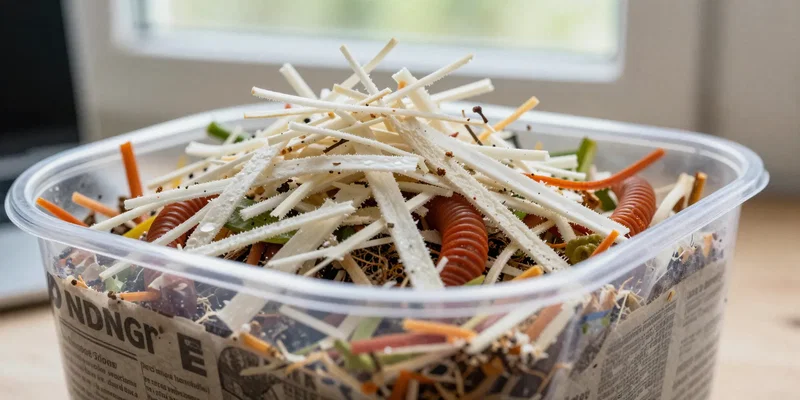
Junk mail. Old bills. The manuscript you finally gave up on. Shredded paper seems like the ultimate worm bedding hack. It's already in your apartment. It takes up food scraps and dries things out when your bin gets a little too wet. But here's the catch. Office paper is heavily processed. Glossy flyers might as well be plastic. Newspaper ink has gotten safer over the years, but it's still not great in bulk. Paper mats down. It clumps. Worms can't move through a solid sheet of matted pulp, so you end up flipping layers like some kind of compost lasagna. I use it sparingly. A handful mixed in? Fine. A whole bin of shredded tax returns? Your worms will riot.
Stop Overthinking It and Mix Them
If you want my honest take, run a blend. Start with a base of coco coir for worms to give your bin structure and keep the moisture steady. Layer in some cardboard bedding when you have it—soaked, shredded, tape removed—to add air pockets and keep things from getting too dense. Sprinkle shredded paper on top if the bin looks wet. Your worms aren't purists. They're not writing reviews. An apartment worm bin just needs balance. Carbon to nitrogen. Air to moisture. Stop treating it like a chemistry final and start treating it like a really weird pet habitat.